
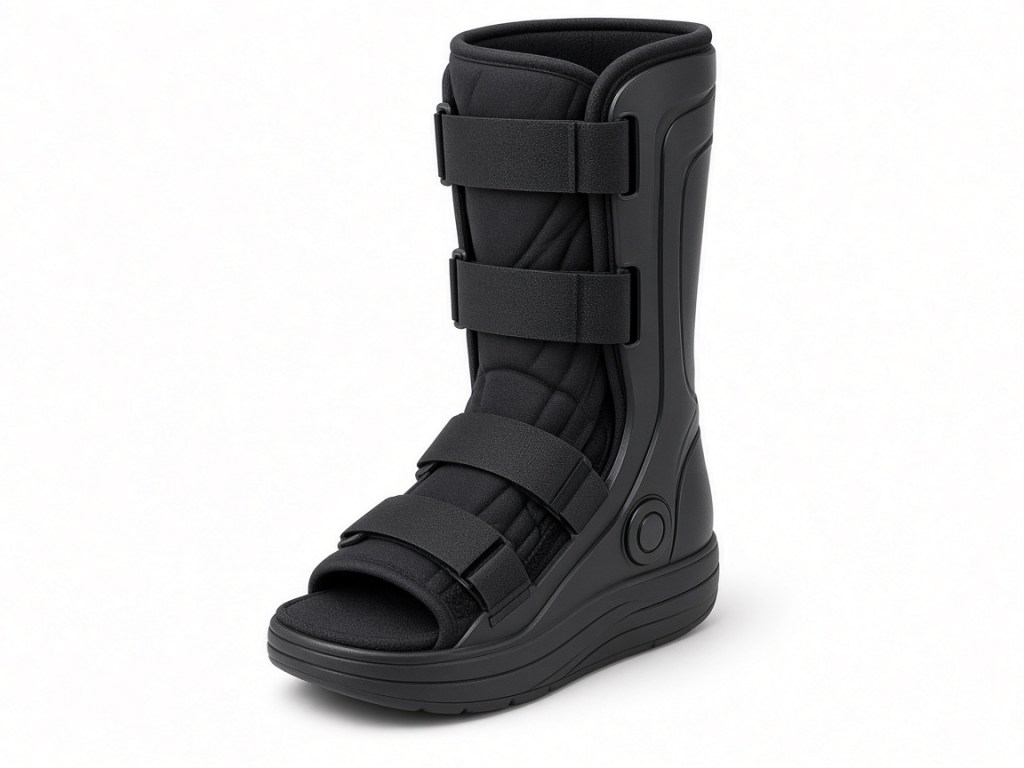
A walking boot protects the foot and ankle while you heal, but it takes some getting used to. These general tips cover the questions people ask most. Always follow your own clinician’s instructions about when to wear the boot and how much weight to put on your foot.
Getting a good fit
- Wear a thin, clean sock or liner under the boot.
- Put your heel all the way back in the boot before closing the straps.
- Fasten straps from the toes up toward the shin, snug but not tight.
- If the boot has air cells, inflate them for a firm, even feel; let out a little air if it feels too tight.
Evening out your stride
A walking boot is usually thicker than a regular shoe, which can make you feel uneven and put strain on your hip or back. Many people wear a supportive shoe with a thicker sole on the other foot, or a shoe leveler made for this purpose. Ask your clinician if this is right for you.
Sleeping and showering
Whether to wear the boot to bed depends on your injury, so ask your clinician. If you are told to keep it on, loosen the straps slightly and prop your foot on a pillow. Most boots should not get wet; a waterproof cast cover and a shower chair make bathing easier and safer. See our bathroom safety checklist.
Skin care and warning signs
Check your skin every day for redness, blisters or sore spots. Call your doctor if you notice numbness, tingling, increasing pain, swelling or color changes in your toes.
Need extra support while walking in a boot? Crutches and canes can help with balance.
Need help choosing?
Mudallalah DME is based in Plano, Texas. Walking boots are available to order, and we ship to most U.S. states. Contact us to confirm yours. We accept self-pay only: cash, credit or debit card, Zelle, or check (payment details). Call (214) 972-9830, Monday to Friday, 10 AM to 6 PM, or request equipment online. Hablamos español. نتحدث العربية.
This article is general information, not medical advice. Please consult your doctor or therapist about what is right for you. Some items may require a prescription. Use products only as directed by the manufacturer and your clinician. See our Medical Disclaimer.

