
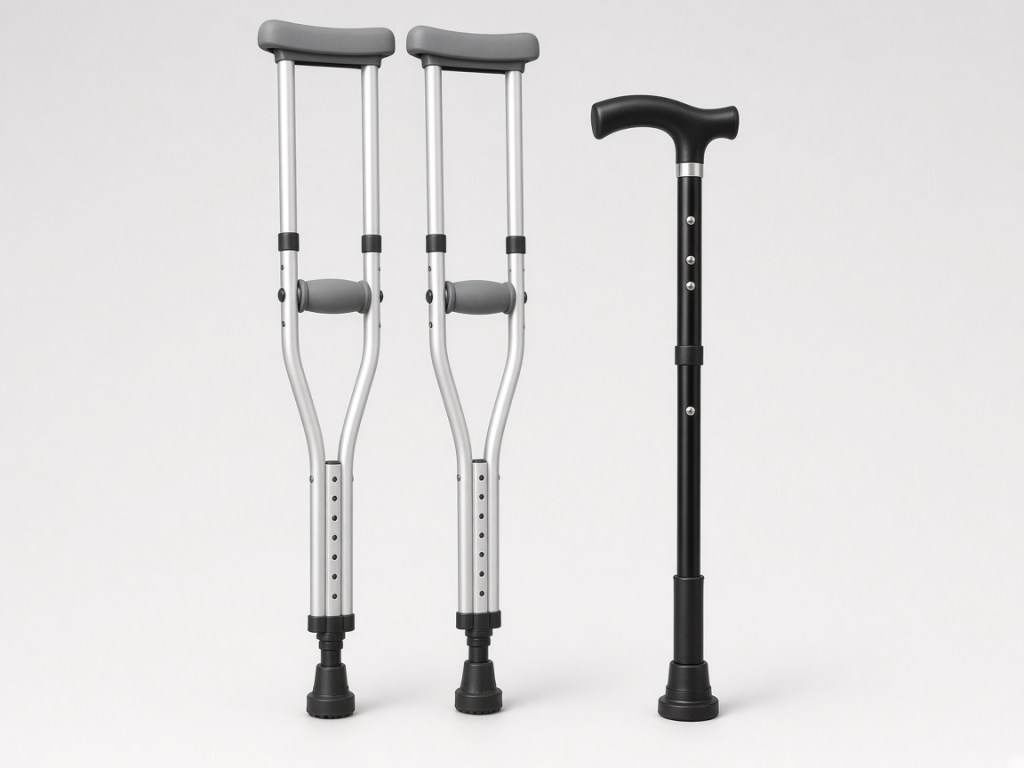
A cane is one of the simplest mobility aids, but the right type and the right height make a big difference in comfort and steadiness. Here is a general guide to help you talk with your doctor or physical therapist.
Common types of canes
- Single-point cane: a straight cane with one rubber tip, for light balance support.
- Offset cane: the handle bends forward so your weight sits over the shaft, which many people find more comfortable.
- Quad cane: a small base with four tips that can stand on its own and gives a wider base of support.
- Folding cane: folds into sections for travel or storage.
How to measure cane height
Stand up straight in your everyday shoes with your arms relaxed at your sides. The top of the cane handle should line up with the crease of your wrist. When you hold the handle, your elbow should bend slightly, about 15 to 20 degrees. Most adjustable canes change height in one-inch steps with a push button.
Tips for using a cane safely
- Hold the cane in the hand opposite your weaker or injured leg, unless your clinician says otherwise.
- Move the cane forward at the same time as your weaker leg.
- On stairs, go up with the stronger leg first and down with the cane and weaker leg first, using a handrail when you can.
- Replace worn rubber tips, and check that push buttons are fully locked.
When a cane may not be enough
If you need to lean heavily or feel unsteady even with a cane, ask your clinician whether crutches or a walker or rollator would be safer. Our guide Walker vs. Rollator explains the difference.
Need help choosing?
Mudallalah DME is based in Plano, Texas. Canes and crutches are available to order, and we ship to most U.S. states. Contact us to confirm yours. We accept self-pay only: cash, credit or debit card, Zelle, or check (payment details). Call (214) 972-9830, Monday to Friday, 10 AM to 6 PM, or request equipment online. Hablamos español. نتحدث العربية.
This article is general information, not medical advice. Please consult your doctor or therapist about what is right for you. Some items may require a prescription. Use products only as directed by the manufacturer and your clinician. See our Medical Disclaimer.

